My third CRM
People ask where the name CRMTHREE comes from. The answer is simple: it is my third CRM system. The name counts.
The first
My first CRM was SAP CRM. It is where I learned what enterprise software actually is under the surface: a data model with opinions. Business partners, document flows, the quotation that becomes an order that becomes an invoice with nothing lost in between, fields with defined types and lengths that mean the same thing in every system they touch. It was not glamorous, and nobody would call it delightful - but it taught me a respect for data discipline that never left me. When customer data survives twenty years of use, that is not an accident. Somebody specified it.
The second
My second was Salesforce. A different world: the platform idea. Objects, fields, layouts, and automation you could shape without a compiler, an ecosystem where configuration was a profession of its own. What I took from those years is that configurability is a feature users can feel - a system that adapts to the team beats a system the team adapts to. And I learned where the model strains: when every problem must be solved inside one platform's walls, the walls become the problem.
The third
For two decades the lesson seemed to be: a real CRM is something only a large vendor can build. The data discipline of the first, the configurability of the second - that takes armies.
Then the economics of building software changed. With AI agents doing the implementation, one thought-through design can become working software in weeks. So I wrote the design I always wanted: the document flow and data discipline I learned from my first CRM, the configurability I learned from my second, and a layer neither of them could have had - AI briefings before every customer interaction, semantic search, a bring-your-own-model policy where the keys stay on your server.
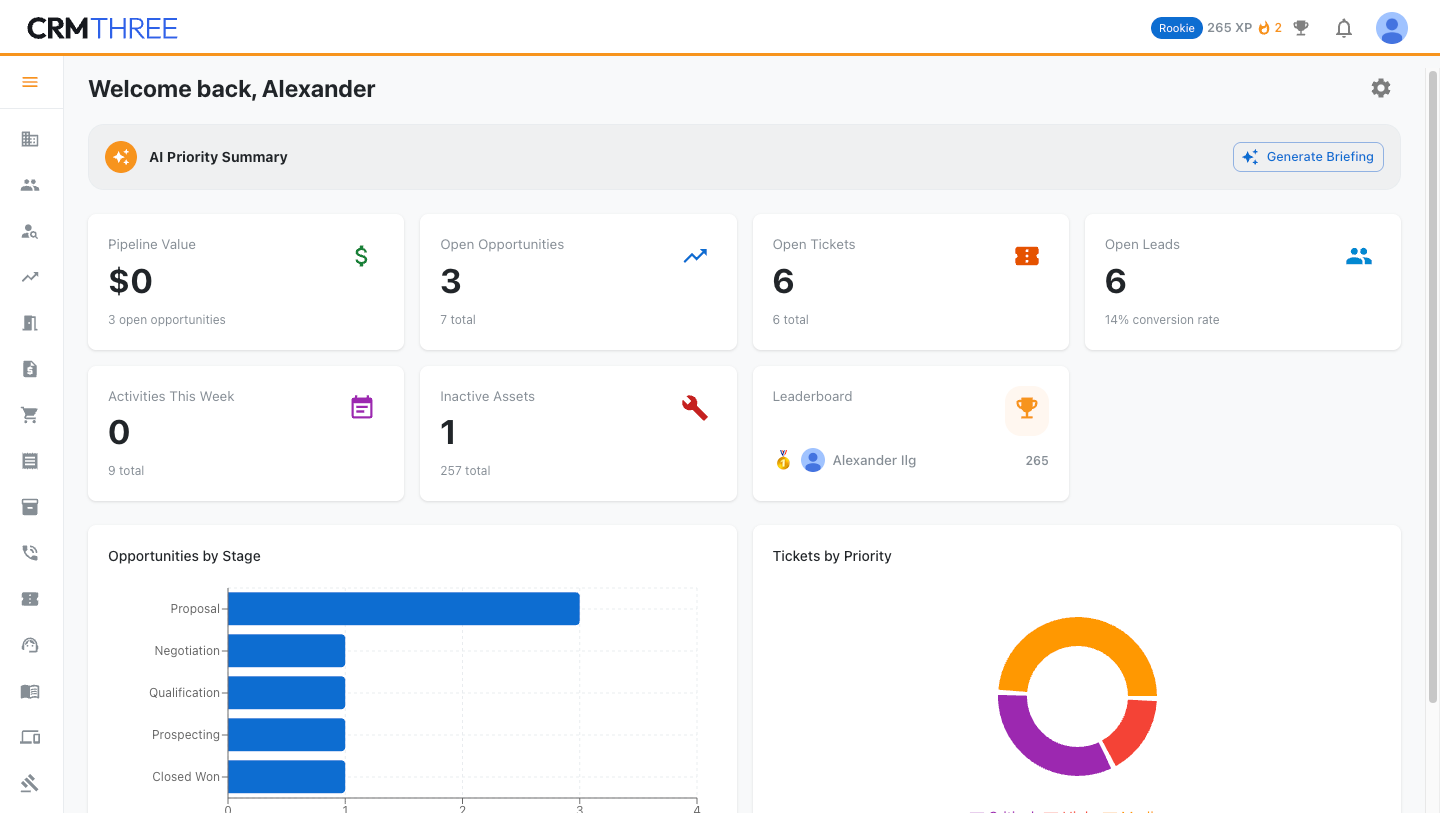
The dashboard: pipeline, tickets, leads, and an AI priority briefing on top.
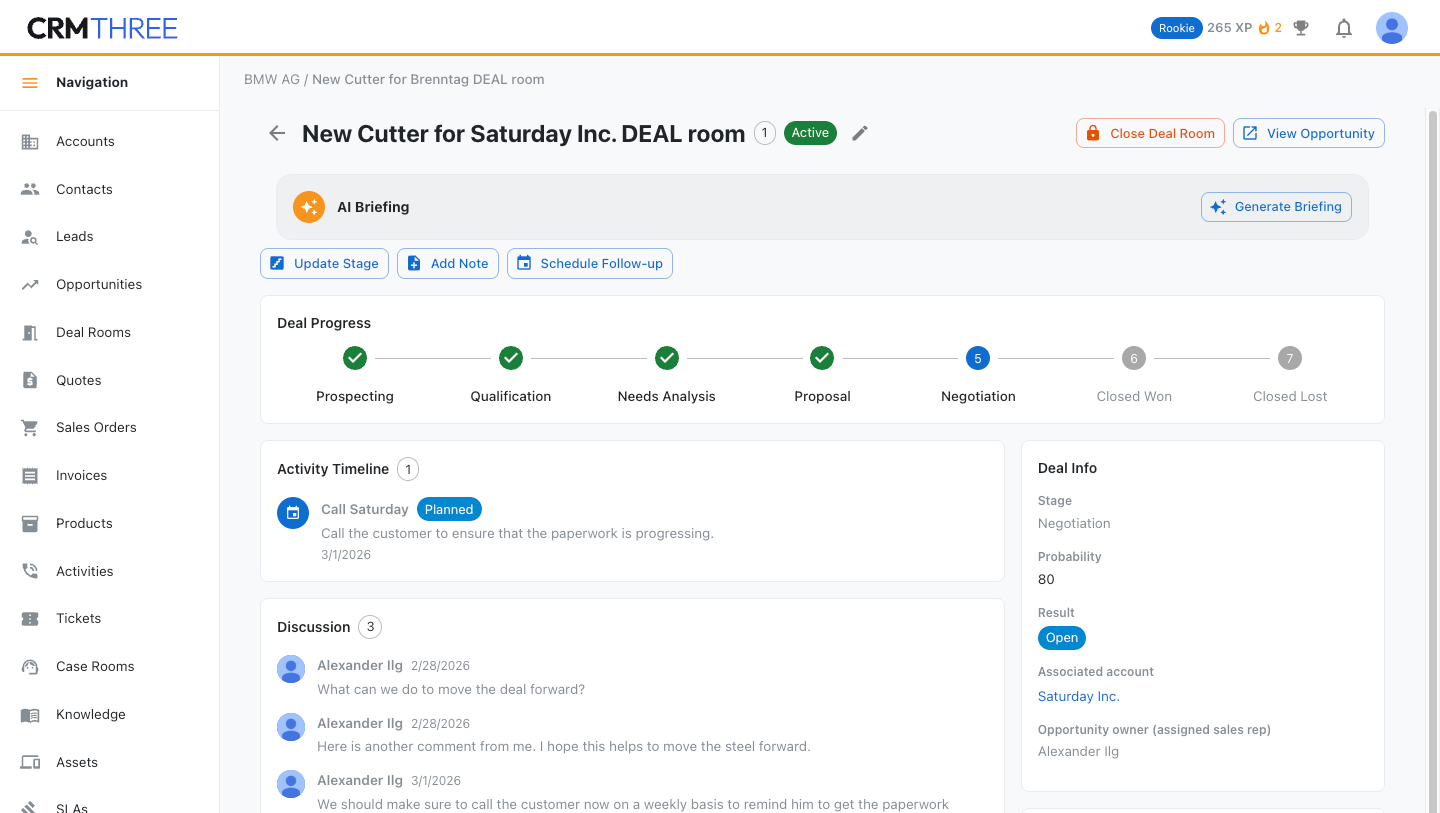
A deal room: one workspace per important deal - stage progress, timeline, discussion.
That is CRMTHREE. And the third one differs from the first two in the way that matters most: its design is open. The full specification - functionality, UX, architecture, data model - is published under MIT, next to a self-hostable reference implementation. Run it, or take the spec and build your own on the stack you trust.
The first two CRMs taught me what to build. The third one, everybody gets.
← All posts